Start With Flow
Forget the idea of a perfect “triangle” like an indoor kitchen.
Outdoor kitchens work best when everything moves in a straight, logical line:
prep → cook → serve
That’s it.
You don’t want to:
cross over people
double back for tools
or turn your back on your guests the whole time
If your layout keeps you facing outward and moving in one direction, you’re already ahead of most setups.
The Layouts That Actually Work
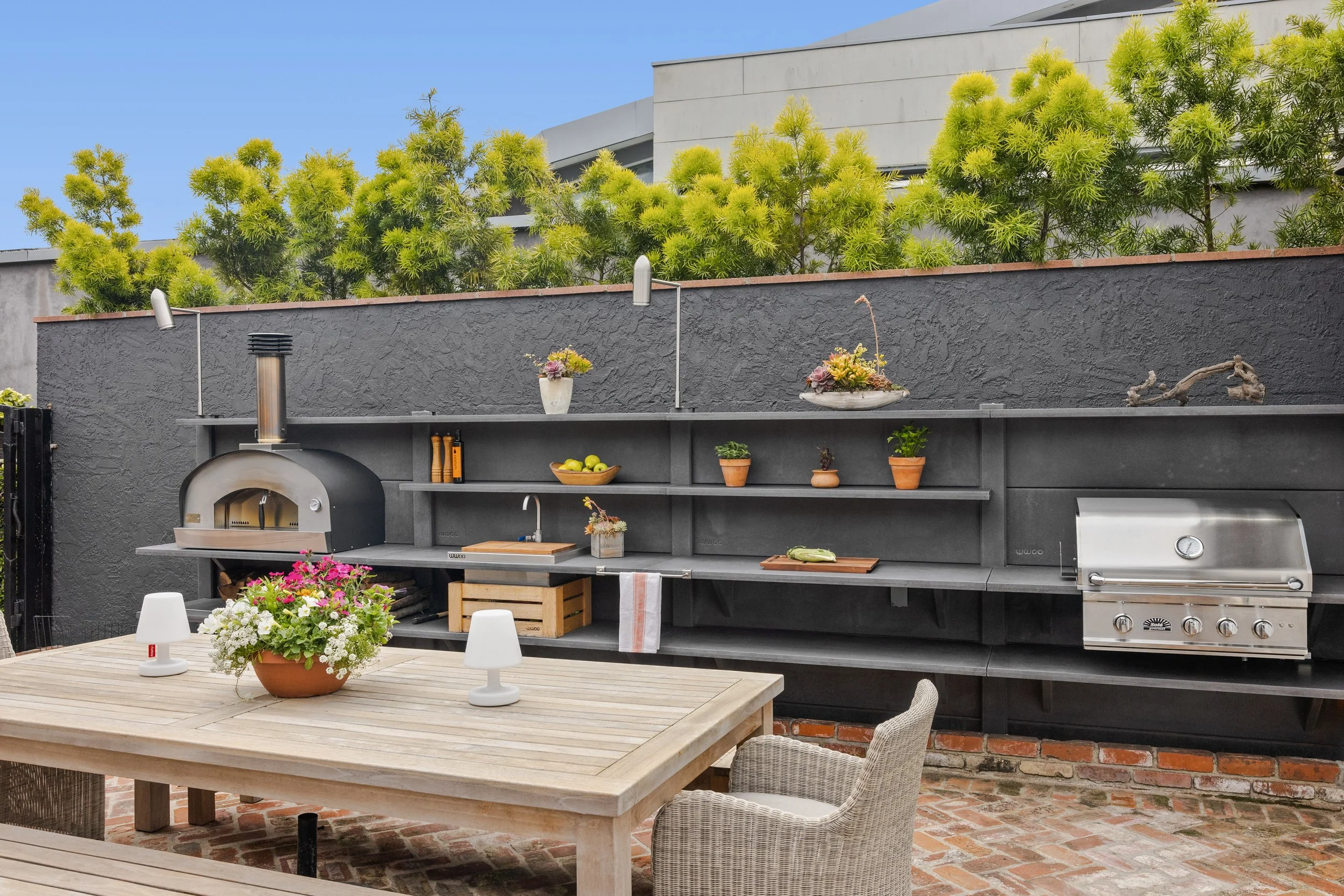
1. Straight Run (Best for Small Spaces)
Clean, simple, and surprisingly effective.
Everything lives on one wall
Easy to design and install
Works great for patios or tighter backyards
Watch out for: not enough prep space between appliances.
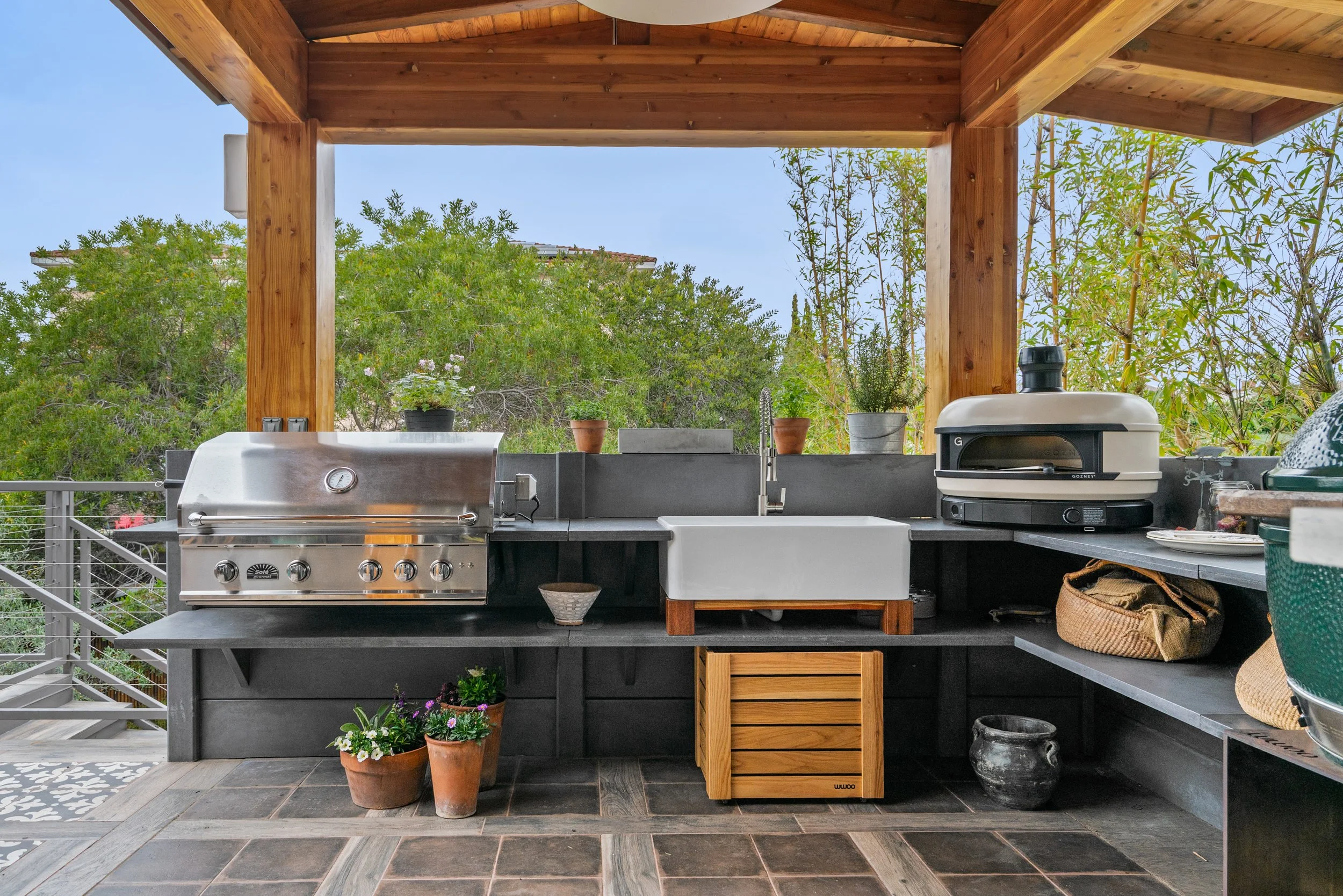
2. L-Shape (Most Popular for a Reason)
This is where things start to feel like a real kitchen.
One side for cooking, one for prep/serving
Creates a natural corner workspace
Keeps traffic out of your way
Bonus: it subtly separates “cooking zone” from “hangout zone”
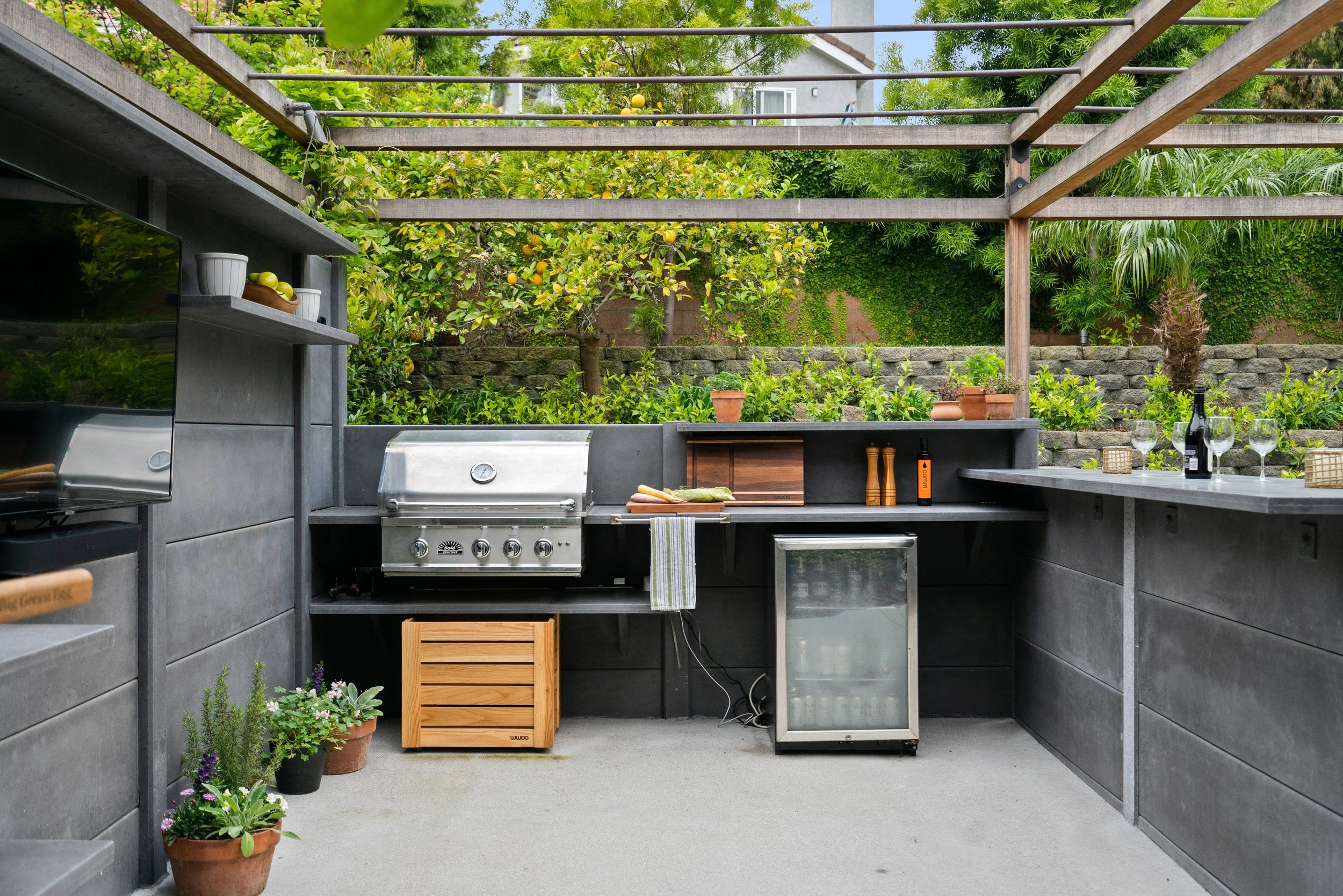
3. U-Shape (For People Who Actually Cook a Lot)
This is the most functional—but only if you have the space.
Maximum surface area
Everything within reach
Feels like a full kitchen outdoors
Watch out for: making it too tight or closing yourself off from guests
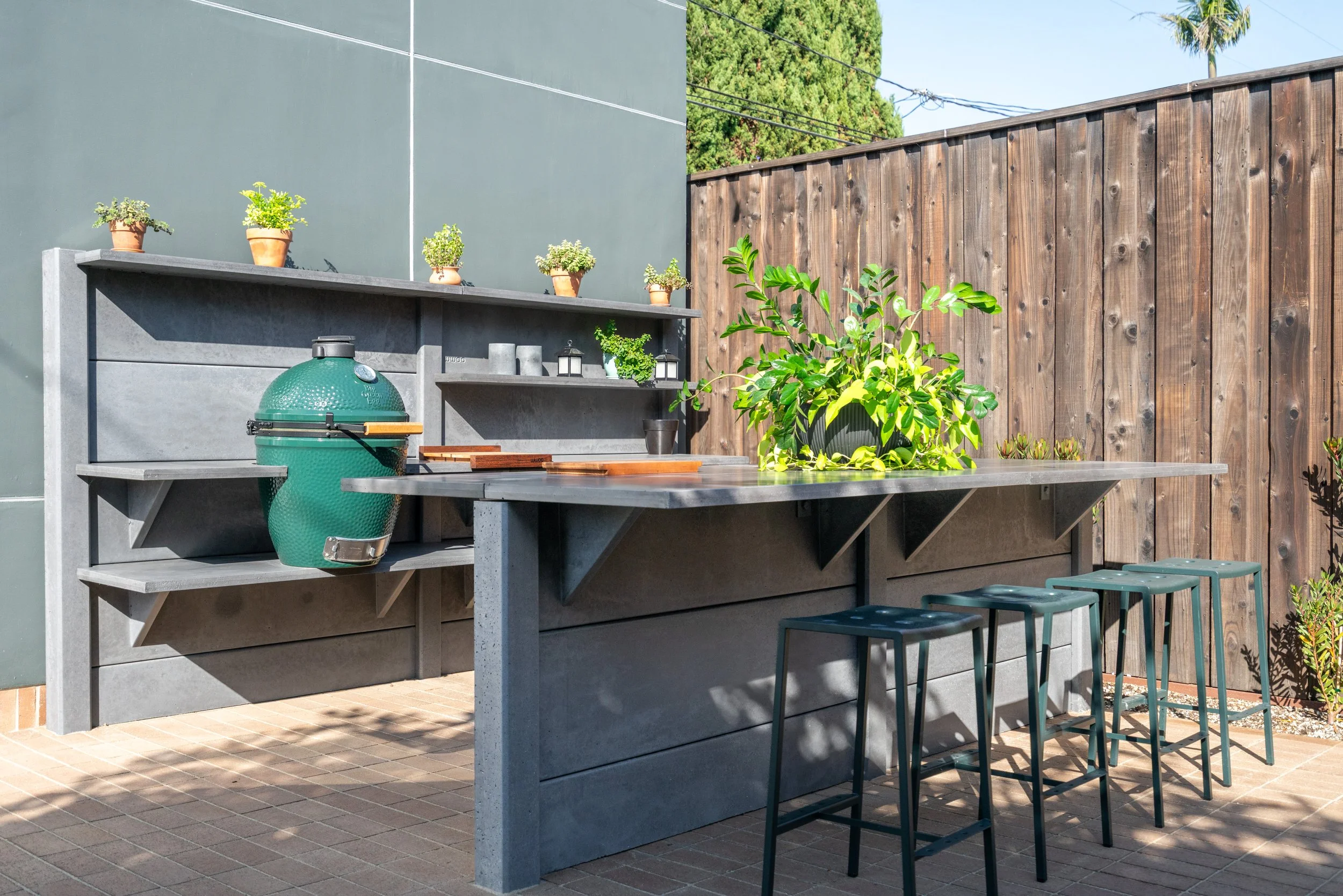
4. Island Style (Best for Entertaining)
Less about cooking efficiency, more about experience.
Guests can gather around
You stay part of the conversation
Works great with bar seating
Reality check: you still need solid prep space built in
Let’s Talk About Counter Space
This is the most common mistake: not leaving enough room to do anything.
There’s no official outdoor kitchen standard—but here’s a rule that actually works in real life:
A Good Rule of Thumb:
Plan for at least 24–36 inches of counter space next to every major appliance.
So for example:
Grill → 2–3 feet on at least one side (ideally both)
Pizza oven → landing space for trays and turning pies
Kamado → room for tools, plates, and airflow
If you can, aim for:
3 feet of usable prep space total (minimum)
4–6 feet if you actually cook and host regularly
Anything less, and you’ll feel cramped immediately.
Don’t Forget the “Invisible” Space
Good layouts aren’t just about counters—they’re about movement.
Make sure you leave:
At least 36 inches behind the kitchen for walking space
More (42–48 inches) if people will be passing through regularly
This keeps things from feeling cramped when you actually have people over.
Face the Right Direction
This sounds small, but it changes everything.
If your layout forces you to:
stare at a wall
turn your back to guests
or cook in isolation
…it’s going to feel off.
Whenever possible, design your kitchen so you’re:
facing outward
looking toward seating or a view
part of what’s happening, not removed from it
The Bottom Line
A good outdoor kitchen layout isn’t about fitting in more - it’s about making the space work.
If you get these right:
logical flow
enough counter space
room to move
and a layout that keeps you connected
…everything else falls into place.
Most people focus on appliances first.
In reality, layout is what determines whether you’ll actually enjoy using it.